Writing
When nothing is guaranteed, everything is possible
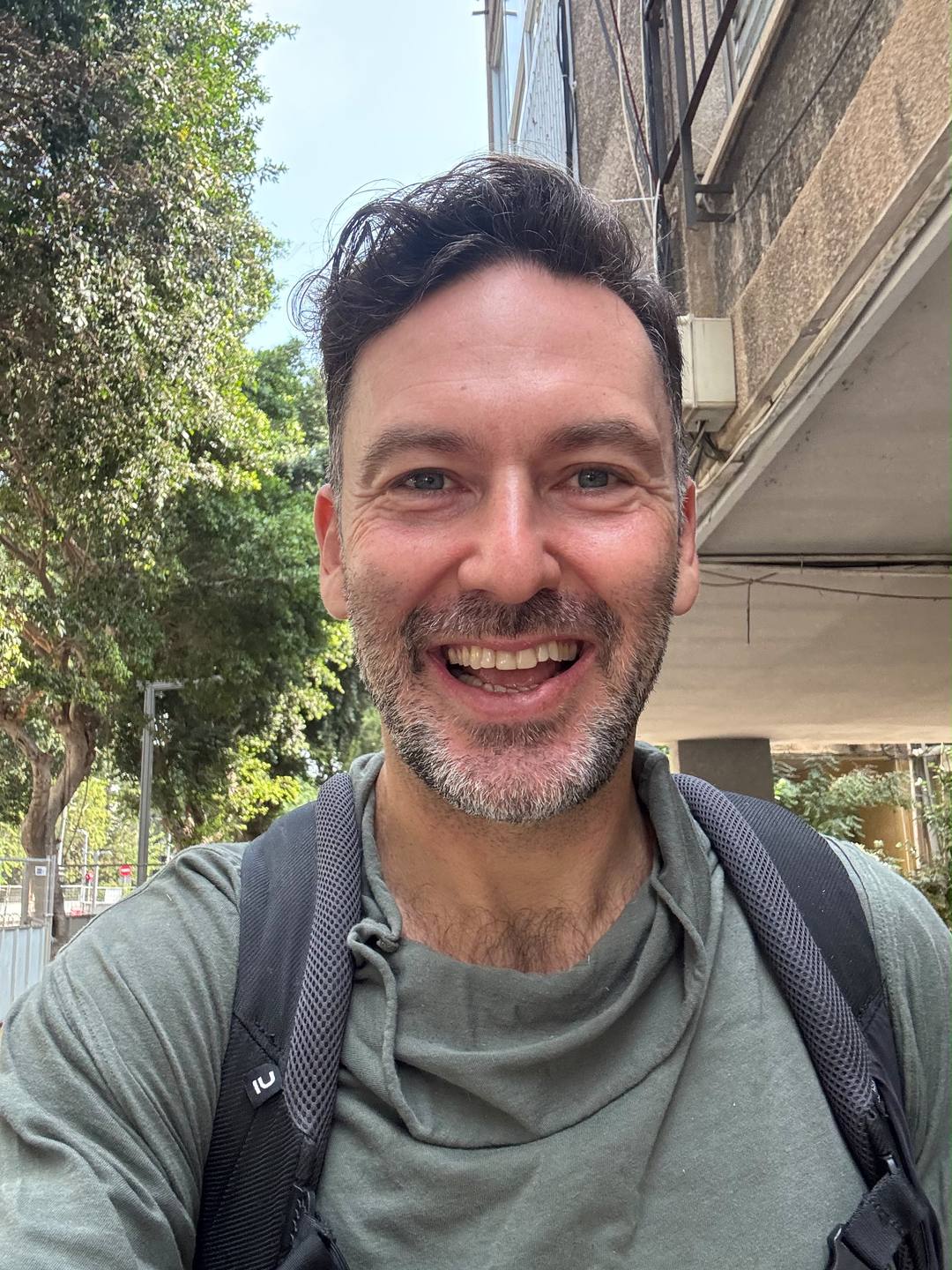
I have been building businesses for 23 years. I've made money, lost some, lost more, and made more again.
And there's one thing I still can't sell: a guarantee.
Yet it's something we all crave. I get it. We're human, and we need safety, stability, and to know exactly where the next paycheck is coming from. Our brains start calculating the ROI the moment our hearts think about taking a risk.
But I also believe, with everything in me, that people deserve more, and that they often underestimate what they can achieve. All they need is a nudge. And I want to do that for you.
However, if guarantees are your thing, I might disappoint you. Because if there's anything 23 years of entrepreneurship have cemented for me, it's this:
Nothing is guaranteed in the world we live in.
But there is something better, and it's what I want to point you toward:
A possibility.
That's what has worked for me, for 23 years, and for the years before.
Twenty-Three Years of No Guarantees
Early Jobs and Open Doors
I started working when I was 12, maybe even earlier. I sold flowers on street corners, knocked on doors asking for donations, and pushed flyers into mailboxes one building at a time. Then came the fast-food joint, wiping down tables. After that I waited tables, delivered pizzas, and poured drinks behind a bar.
In fact, there was more. I worked every job you can think of, and each taught me the same thing: more hours didn't mean more money.
Then the army drafted me. I felt like a misfit there too, so I looked for a different role. I trained as an EMT, a kind of medic for soldiers, and did that for a while. But nothing felt like me. I couldn't see myself in the army, in a university lecture hall, or behind a desk. I had knocked on a lot of doors by then, and plenty of them opened, but none felt like home.
I only knew one thing: I wanted to learn Spanish.
The Language I Grew Up Without
Spanish was the language my father grew up with. His family fled Poland by boat and landed in Uruguay, then later moved to Israel, still speaking Spanish at home. But my parents divorced, and I grew up without it.
So I flew to Spain, determined to learn the language and work in sales. That went badly.
I couldn't sell anything and ran out of money. A friend of my father's in Argentina offered to host me, and since Argentina was incredibly cheap at the time, I went.
It didn't last. I was 22 and rebellious, and I broke the house rules by sneaking a girl in after a night out. The security cameras caught it. My father's friend told me they could no longer trust me, and off I went.
Two Dollars a Night in Buenos Aires
I took a 13-hour bus to Buenos Aires, watching the lights of the city slowly rise out of the dark, and checked into the cheapest hostel I could find: $2 a night. A Spanish class also cost $2, so I went every day. I did the math and figured I could last about two months.
Nobody there spoke English, so I had to learn. I slept in a three-level bunk bed alongside travelers from across Latin America, and I picked up Spanish faster than I would have otherwise. Then I started inviting anyone who wanted to learn Spanish to come and stay at that hostel.
A few weeks later, the owner called me over.
"You can stay for free," he said.
I had been sending him so many guests that he was giving me a bed to keep me there. I hadn't even realized I was doing anything for his business. I was just sharing something I loved.
That's when the thought first hit me: maybe I could open a place like this myself.
But I had no money.
From Hair Straighteners to My First Hostel
So I flew to the United States and ended up in a shopping mall, selling hair straighteners. Suddenly I was speaking all the Spanish I hadn't been able to use in Argentina, this time with the Mexican customers who came by.
I arrived before the doors opened and left after they closed. Fourteen hours on my feet, with the same questions repeating in my head:
What am I doing here? Is this really my life?
It felt like being a slave to the system.
There was no hourly rate on that job. It was all commission. If you didn't sell, you didn't make any money.
The first few days, I made $0 and stood on my feet for 14 hours a day. Then, after about a week, something clicked. I started selling, and soon I was making hundreds of dollars a day in commission. At the end of my second week, my manager came over and told me I had broken the daily sales record!
Maybe the Spanish had worked. In nine weeks, I made around $20,000, more money than I had ever seen.
I carried it back to Buenos Aires, bought a used bicycle, and rode through the same neighborhood where I had slept in that bunk bed, looking for old houses. It was anything but smooth. I got cheated. I lost everything. I had to ask for help just to get back on my feet.
But eventually, I opened the doors of my first hostel. I called it Mini Hostel. It grew into more hostels and then into my first startup, MiniHostels, which I sold five years later.
What surprised me was how little my daily work changed. I was still doing everything, putting in long hours, and failing at times. But now I owned it, and that made all the difference.
Looking back, I don't think any of it would have happened without those earlier jobs. By working jobs I didn't love, I learned what not to do and what is not for me. These jobs didn't make me money, and they never felt like I belonged.
But they did one thing very well: they redirected me to where I belong.
Entrepreneurship.
And once I became an entrepreneur, once I had my own business, I knew I could never go back to having a job.
Building, Burning Out, Beginning Again
For the next two decades, I built multiple businesses, held many roles, and sold a variety of products and services, always keeping people at the heart of it all.
After MiniHostels, I helped create a property management system called Mini Hotel. Later, I became CEO of Roomixer, which created alternative revenue streams for hotels and vacation rentals. In 2015, I co-founded Recast, a karaoke studio for movies and TV, built on technology that let anyone step into a scene.
In 2016, I gave my "American Dream" a go and moved to the United States to build PassRight. Years earlier, I had struggled, and in fact been scammed, while getting my green card. It cost me money, immense pain, and a missed family wedding. I got passionate about solving this problem for people like me.
But a few years later, in 2019, I burned out.
My First Burnout
That took me back to my spiritual practice, and in November 2019 I flew to Santa Teresa, Costa Rica, planning to stay a few months. Then COVID hit, and I decided to stay.
As the world went remote in 2020, the idea for Yoko Village took shape there. Building on the coast of Costa Rica proved far harder than we planned. Things got messy, the stakes got higher, and the losses piled up, both financial and personal. Costa Rica and Yoko, and the lessons they taught me, shape how I think and build today.
These 23 years of entrepreneurship didn't hand me anything on a silver platter.
Instead, they gave me something far more valuable: possibilities.
The possibility to do something better, to help someone more, to be something right.
None of that would have been possible without three things. The belief that I could do it, especially when the world gave me reasons not to. Taking ownership of my future, when my past was a list of jobs that sucked the soul out of me. And the courage to take a risk and go after million-dollar ideas with no money to fund them.
Today, I am building Oka: One World Family.
Once again, people, genuine connections, and the opportunity to grow together, are at the heart of it. But the impact I want to create is bigger than my own story. I want to build something that gives other people the same chance to belong, to grow, and to own their future.
Building this alone would only be a fraction of what's possible. Together, we can create something that matters far beyond us. So, if you're in, I want to welcome you as an entrepreneur at Oka.
So what exactly would you be building? Let me walk you through it:
Oka: One World Family
For the explorer in everyone: the one who stops to have a meaningful conversation with a stranger, who can't wait to catch the next flight or train but wouldn't think twice before helping someone drag a suitcase. The one who loves to travel slow and is happy to carry an empty suitcase, but never an empty heart.
At Oka, that heart finds family in every part of the world, from Costa Rica to Thailand and everywhere in between.
What Oka Isn't
Oka isn't an alternative to Airbnb or just another house-sharing program. While others sell a room in exchange for money, Oka welcomes you home. To a family, in a part of the map you might be exploring for the first time.
Who Oka Is For
Not transactional but relational: Oka is built for people who crave genuine connections, deep conversations and slow travel.
Who It's Not For
Anyone looking for a free hotel. At Oka, everyone shows up, with community work, Pods, and a genuine effort towards making someone's life better.
By now, if you feel like you've come home to your purpose, you're meant to be a part of Oka. Not as someone who only relates to what we're building, but as someone who actually builds alongside.
What I'm Looking For
Not long ago, you could walk into a meeting room (or a Google Meet, today) carrying the badges of your previous roles, or win an interview by tailoring your CV to the job description. But a perfect CV isn't what I'm looking for.
What I want to see is what you can do. That means standing out has never been easier. All you've got to do is truly show what you bring to the table.
The People I'm Hoping to Meet
Let me tell you about someone who did exactly that. Her name is Franzi.
She saw what we were doing and told me she wanted to work with us. We kept in touch, and soon she joined one of my webinars, where I talk about Oka, its vision, and how it all works.
When we opened membership, she joined. She paid. She didn't ask for a freebie. I was delighted. Some time had passed, so I asked, "Do you still want to work with us?" She said yes, but she wasn't sure about a full-time role. So we agreed she'd help with the webinars, I'd pay her specifically for that, and we'd see how it went.
She wrote back: "I love it."
Then she did something no one else had done. She shared her page and her affiliate link, invited people, and created an event. She filled out her profile properly. That's when I thought, there's something here with her.
There was intentional participation.
Plenty of others had the same chance. What she did differently was show up. She showed me what she could do, and she made her own move.
That's the person I'm hoping to meet!
And if that's you, I'd love to see you in one of my webinars, where I can get to know you better and introduce you to others from the tribe!
In the meantime, you can find the right role for you at Oka or reach out to me at liran@okavillage.com.
See you on the other side!