Writing
From Yoko to Oka: Learning to Build a Different Kind of Community
After the failure of Yoko Village South, I spent a long time reflecting on what had happened and what it meant to take responsibility. I wanted to repair what I could, understand my mistakes, and find a more thoughtful way forward.
Yoko had been five and a half years of my life. I had poured my time, energy, and hope into it. My wish to create something meaningful was sincere, but I also made decisions that contributed to painful consequences for myself and others. I wanted to build too much, too quickly. I had to examine my judgment, the people I entrusted with responsibility, and my own understanding of leadership.
Good intentions do not erase the impact of our decisions. That remains one of the hardest and most important lessons I carry from Yoko.
For months, I looked inward. I began to understand that any future project would need to grow from changes in how I listened, made decisions, and worked with other people. A new beginning would not, by itself, repair what had happened.
Learning through connection
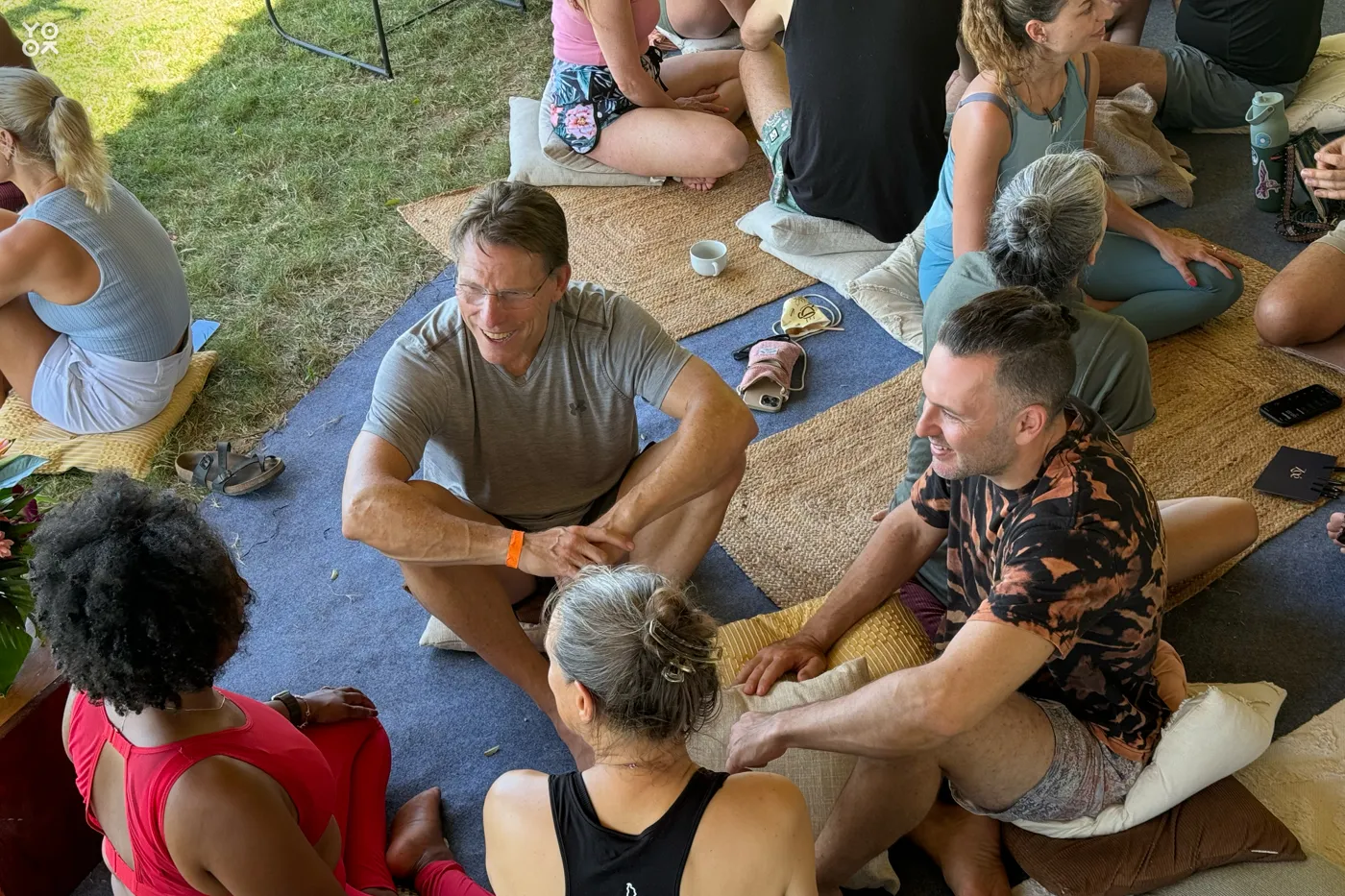
During that period, I began facilitating pods: workshops where people can slow down, speak openly, and listen to one another with care.
For a year and a half, I witnessed people become more willing to share what they were feeling and more able to hear one another. Those experiences deepened my understanding of community. I began to appreciate how much depends on the quality of our relationships: whether we can express uncertainty, acknowledge disagreement, and remain present when a conversation becomes difficult.
I still volunteer my time to facilitate these sessions when I can. They continue to shape how I think about belonging and the responsibility of bringing people together.
At first, I imagined that my next step would be another physical community in Costa Rica. Part of me wanted to show that I could do it differently. Looking back, I can recognize both the hope in that desire and the need to be careful with it.
I wanted a different role, too. I wanted to participate alongside others, with more room for shared decisions and a vision that belonged to the people involved. I became part of a smaller initiative with friends I had met through the pods. My hope was to move slowly and, perhaps one day, live there together.
The beginnings of Oka
Later, I traveled to Thailand and spent time with other communities. I encountered some of the same difficulties I had seen in Costa Rica. The settings were different, but familiar questions remained: How do people share responsibility? How do they work through conflicting expectations? What helps trust survive disappointment?
These experiences made me more cautious about assuming that a beautiful location or a shared ideal would be enough to sustain a community.
They also brought me back to an idea I had already begun exploring: a community that could exist across borders, without requiring everyone to live in the same place.
My own life has unfolded across countries. I have often felt a sense of belonging through the people I meet, even when I am far from somewhere I once called home. I wondered whether it was possible to nurture that experience more intentionally.
Oka grew out of those questions. It became a way to explore community through relationships that could continue across distance, while still making room for people to meet and share everyday life.
How One World Family took shape
The early vision for One World Family was simple: help people welcome one another.
I imagined people opening their homes, spending time together, and experiencing a place through someone who lived there. I thought especially about people traveling alone, who might be looking for companionship and a sense of connection as much as somewhere to stay.
As we began building, the idea developed. There was room for people to share their skills, learn from one another, and contribute in ways that reflected what they could offer.
My experience with the pods remained central to this thinking. Initially, we wanted everyone to take part in a workshop before joining the community. I believed strongly in the connection those sessions could create. Over time, I came to see that asking people to make that commitment before they had experienced the community could make it harder for them to take a first step.
That was another lesson in listening. Something that had been meaningful to me would not necessarily be the right starting point for everyone.
I also found inspiration in communities that gathered to meditate and practice together, including online. I experienced how sharing a practice with others could help me show up more consistently and feel less alone.
I began imagining how these relationships might develop over time. People could first meet through a conversation or a shared practice, then eventually visit one another, learn together, or become friends.
The name One World Family expressed the hope behind it: that people from different places and backgrounds might gradually come to feel more welcome in one another's lives.
A more thoughtful way forward
As the vision developed, I also reflected on my own relationship with social media. I often found myself spending time online without feeling more connected afterward. Sometimes I hesitated to share honestly because I was already anticipating how others might respond.
I wanted to help create a space where participation could lead to something meaningful in a person's life: a friendship, a conversation, a shared practice, or an opportunity to offer care.
That is the direction I have been working toward through Oka and One World Family. It is still an evolving effort, shaped by the people involved and by what we learn together.
I carry the experience of Yoko into this work. I cannot undo what happened, and I do not see a new project as proof that I have resolved every mistake. What I can do is remain accountable for my decisions, listen more carefully, and allow what I have learned to change how I act.
My hope is to contribute to a community that has the time and space to develop trust. I want to approach that work with greater patience, a clearer understanding of my limits, and more openness to the judgment and experience of others.
I am still learning how to do that.
The desire to create something good remains. Today, I try to hold it with more humility and a deeper respect for the people whose lives become part of the vision.
Want to experience a pod? Schedule one with me.